Harrogate Photography; Industrial shots
Creating beautiful industrial photography
Industrial environments offer a unique blend of scale, texture and narrative. With the right approach, factory floors, warehouses, refineries and workshops become subjects of striking, emotive imagery rather than merely functional backdrops. Here are practical considerations and techniques to create compelling industrial photographs that communicate a brand’s story, capability and atmosphere.
Understand the brief and the site
Identify purpose: editorial, marketing, corporate reports, social media, or technical documentation. The purpose determines style, format and the level of detail required.
Scout in advance: visit the site to assess light, hazards, access points, vantage points, and operational schedules. Note areas with strong shapes, repeating patterns, machinery silhouettes and worker activity.
Health & safety: obtain PPE, induction and any permits. Plan shot lists to avoid interfering with operations and to keep both crew and subjects safe.
Lighting and mood

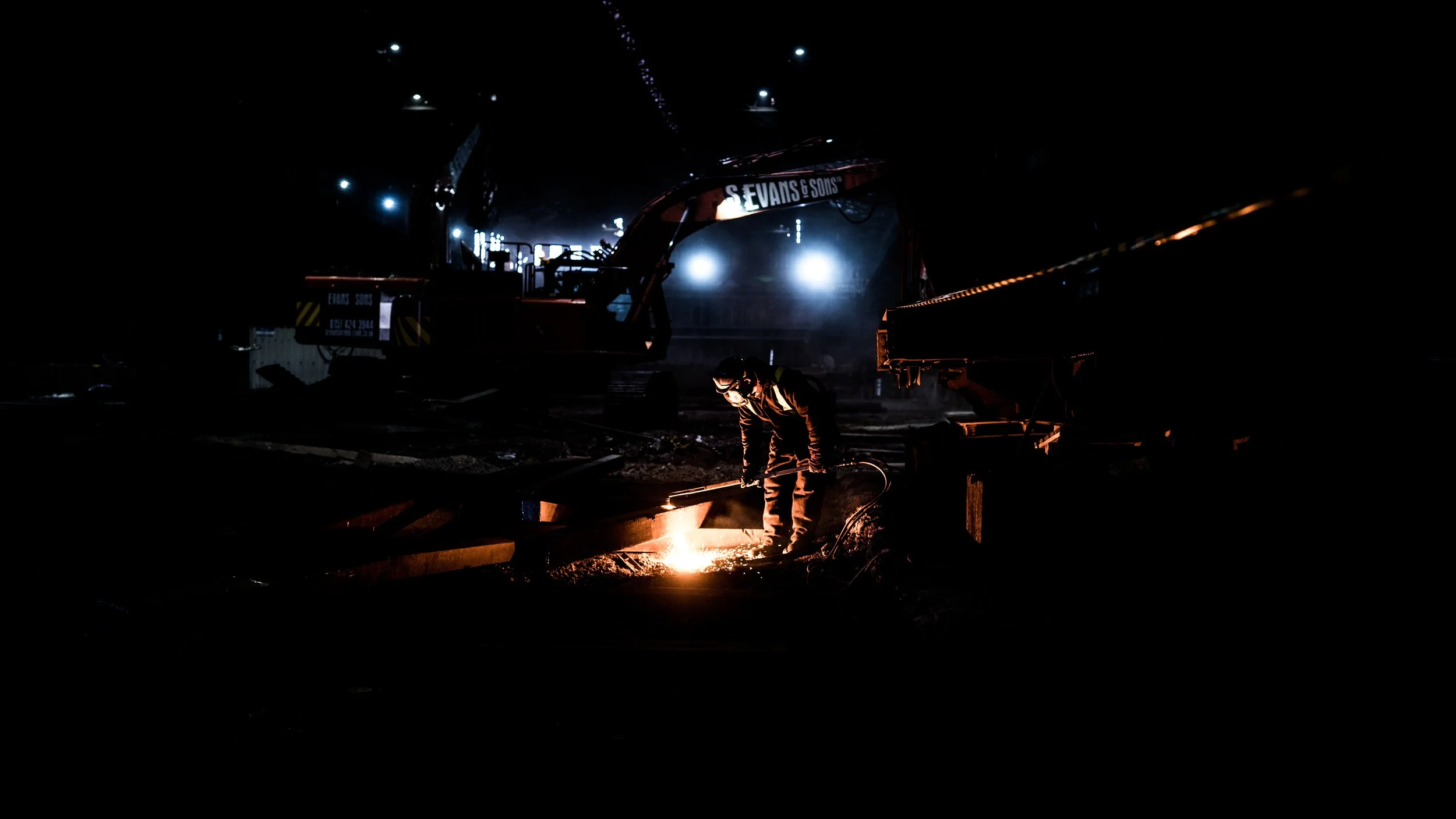
Left is a shot I took as part of a film project in Liverpool with my video company
This is one of my favourite industrial shots - working in an environment with dust and mist and lights and heavy machines offers rich photographic opportunityUse available light where possible: industrial spaces often have dramatic directional light from windows, skylights, or high bay lamps. These can create long shadows and texture that add depth.
Supplement with flash or LED panels: large soft sources—octaboxes, softboxes or diffused LED banks—tame harsh highlights and preserve detail. For large scenes, use multiple light sources to balance foreground and background.
Control contrast: industrial scenes often contain specular highlights from metal surfaces. Use polarising filters, diffusers or flagging to manage glare and preserve detail.
Embrace atmosphere: smoke, steam, dust or aerosolised coolant can be used to create volumetric light and mood—ensure safety and get permission before encouraging any such effects.
Composition and framing
Make it stand out
Use scale to tell a story: include people, forklifts or tools to communicate the size of machinery or space. Low-angle wide shots convey monumentality; tight detail shots highlight craftsmanship and materiality.
Look for leading lines and repetition: conveyors, piping and girders create natural lines that guide the eye and create rhythm.
Vary focal lengths: wide lenses for environmental context, medium telephoto for machinery clusters, and macro/detail lenses for textures, welds and fastenings.
Negative space and balance: industrial settings can be visually busy—use simple compositions with negative space to let key elements breathe.
Working with people
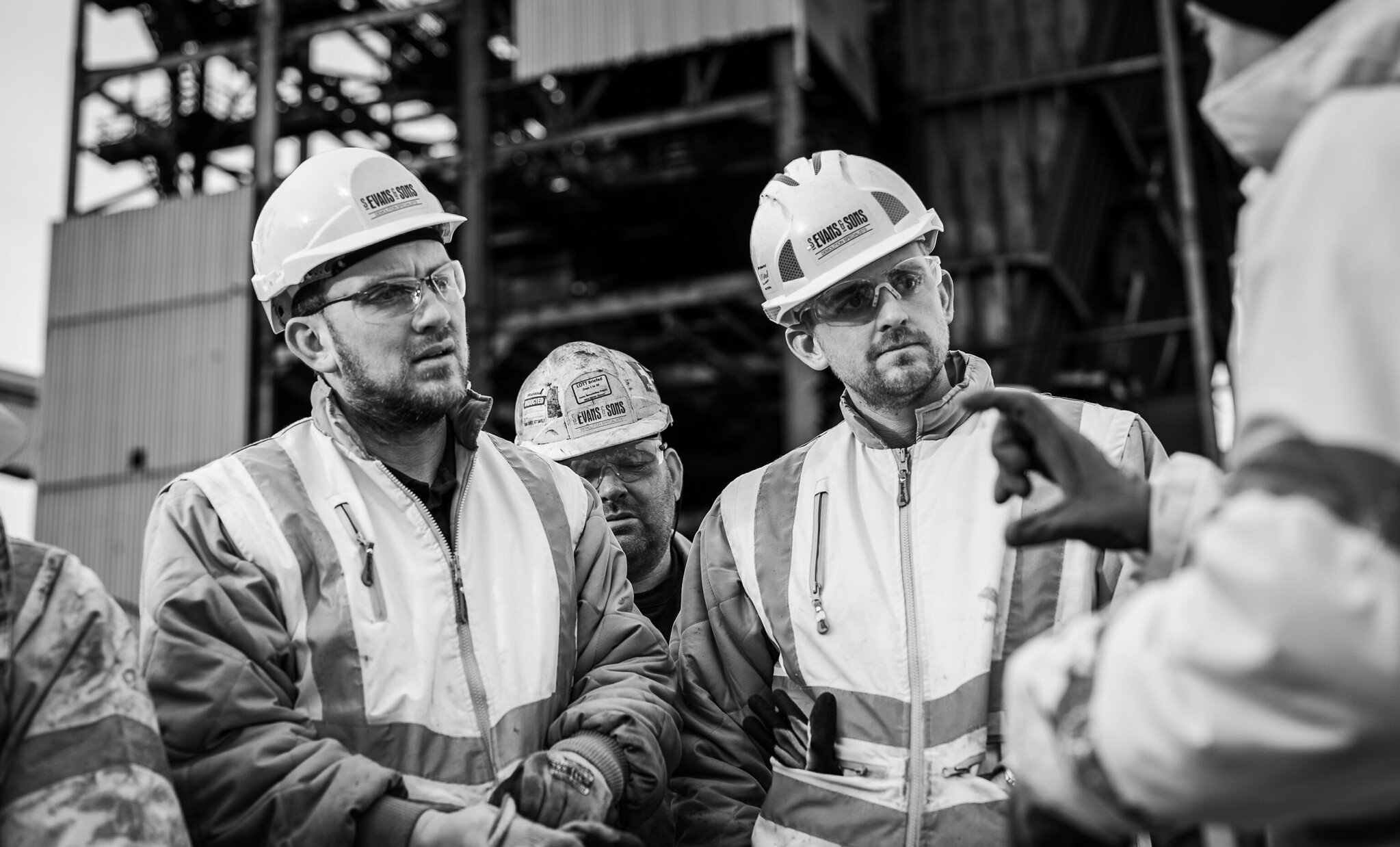
The guys from S Evans and sons engaged in a briefing
Capture process and expertise: images of technicians, operators and engineers at work communicate skill and reliability. Candid action shots feel authentic; posed portraits feel authoritative.
Respect safety and workflow: coordinate with supervisors to stage shots that don’t interrupt production. Use long lenses for unobtrusive candid captures.
Directing subjects: give clear, minimal instructions so workers stay natural. Focus on small gestures—hands at a control panel, concentrated expressions, measured movements.

Colour, texture and finish
Retain materiality: industrial subjects often look better with clarity and true-to-life colour. Shoot in RAW to allow precise colour grading in post.
Select a colour palette: steel greys, industrial blues, rust tones and safety yellows are common—either embrace them or selectively desaturate to emphasise brand colours.
Post-processing: preserve texture and detail with careful sharpening and local contrast. Avoid overcooking HDR effects; maintain the scene’s authenticity.
Technical tips
Use a sturdy tripod for long exposures in low light; industrial spaces rarely lend themselves to high ISO without noise.
Bracket exposures for scenes with extreme dynamic range—then blend in post to retain both highlight detail and shadow texture.
Tilt-shift lenses or perspective correction in post can fix converging verticals in architectural shots of tall structures.
For motion, experiment with panning or slow shutter to convey speed; freezing motion with high-speed sync highlights precision.
Deliverables and workflow
Produce a shot list with mandatory technical images (e.g. equipment ID, safety signage) and creative assets (hero images, lifestyle shots, detail macros).
Supply images in multiple crops and aspect ratios for different uses: full-frame for printed brochures, 16:9 for websites and 1:1 for social media.
Provide retouching options: basic colour correction and exposure adjustments as standard, with advanced retouching available for hero imagery.
Narrative and consistency
Make it stand out
Create a visual narrative across the creating beautiful industrial photography
Industrial environments offer a unique blend of scale, texture and narrative. With the right approach, factory floors, warehouses, refineries and workshops become subjects of striking, emotive imagery rather than merely functional backdrops. Here are practical considerations and techniques to create compelling industrial photographs that communicate a brand’s story, capability and atmosphere.
Understand the brief and the site
Identify purpose: editorial, marketing, corporate reports, social media, or technical documentation. The purpose determines style, format and the level of detail required.
Scout in advance: visit the site to assess light, hazards, access points, vantage points, and operational schedules. Note areas with strong shapes, repeating patterns, machinery silhouettes and worker activity.
Health & safety: obtain PPE, induction and any permits. Plan shot lists to avoid interfering with operations and to keep both crew and subjects safe.
Lighting and mood
Use available light where possible: industrial spaces often have dramatic directional light from windows, skylights, or high bay lamps. These can create longonfidence doesn’t always arrive with a bold entrance. Sometimes, it builds quietly, step by step, as we show up for ourselves day after day. It grows when we choose to try, even when we’re unsure of the outcome. Every time you take action despite self-doubt, you reinforce the belief that you’re capable. Confidence isn’t about havingCreating beautiful industrial photography
Industrial environments offer a unique blend of scale, texture and narrative. With the right approach, factory floors, warehouses, refineries and workshops become subjects of striking, emotive imagery rather than merely functional backdrops. Here are practical considerations and techniques to create compelling industrial photographs that communicate a brand’s story, capability and atmosphere.
Understand the brief and the site
Identify purpose: editorial, marketing, corporate reports, social media, or technical documentation. The purpose determines style, format and the level of detail required.
Scout in advance: visit the site to assess light, hazards, access points, vantage points, and operational schedules. Note areas with strong shapes, repeating patterns, machinery silhouettes and worker activity.
Health & safety: obtain PPE, induction and any permits. Plan shot lists to avoid interfering with operations and to keep both crew and subjects safe.
Lighting and mood
Use
Industrial environments offer a unique blend of scale, texture and narrative. With the right approach, factory floors, warehouses, refineries and workshops become subjects of striking, emotive imagery rather than merely functional backdrops. Here are practical considerations and techniques to create compelling industrial photographs that communicate a brand’s story, capability and atmosphere.
Understand the brief and the site
Identify purpose: editorial, marketing, corporate reports, social media, or technical documentation. The purpose determines style, format and the level of detail required.
Scout in advance: visit the site to assess light, hazards, access points, vantage points, and operational schedules. Note areas with strong shapes, repeating patterns, machinery silhouettes and worker activity.
Health &Creating beautiful industrial photography
Industrial environments offer a unique blend of scale, texture and narrative. With the right approach, factory floors, warehouses, refineries and workshops become subjects of striking, emotive imagery rather than merely functional backdrops. Here are practical considerations and techniques to create compelling industrial photographs that communicate a brand’s story, capability and atmosphere.
Understand the brief and the site
Identify purpose: editorial, marketing, corporate reports, social media, or technical documentation. The purpose determines style, format and the level of detail required.
Scout in advance: visit the site to assess light, hazards, access points, vantage points, andaCreating beautiful industrial photography
Industrial environments offer a unique blend of scale, texture and narrative. With the right approach, factory floors, warehouses, refineries and workshops become subjects of striking, emotive imagery rather than merely functional backdrops. Here are practical considerations and techniques to create compelling industrial photographs that communicate a brand’s story, capability and atmosphere.
Understand the brief and the site
Identify purpose: editorial, marketing, corporate reports, social media, or technical documentation. The purpose determines style, format and the level of detail required.
Scout in advance: visit the site toll the answers — it’s about trusting that you can figure it out along the way.
The key to making things happen isn’t waiting for the perfect moment; it’s starting with what you have, where you are. Big goals can feel overwhelming when viewed all at once, but momentum builds through small, consistent action. Whether you’re working toward a personal milestone or a professional dream, progress comes from showing up — not perfectly, but persistently. Action creates clarity, and over time, those steps forward add up to something real.
You don’t need to be fearless to reach your goals, you just need to be willing. Willing to try, willing to learn, and willing to believe that you’re capable of more than you know. The road may not always be smooth, but growth rarely is. What matters most is that you keep going, keep learning, and keep believing in the version of yourself you’re becoming.